Portions, Not Feasts: Why Your Child's Study Day Should Look Like a Tiffin Box
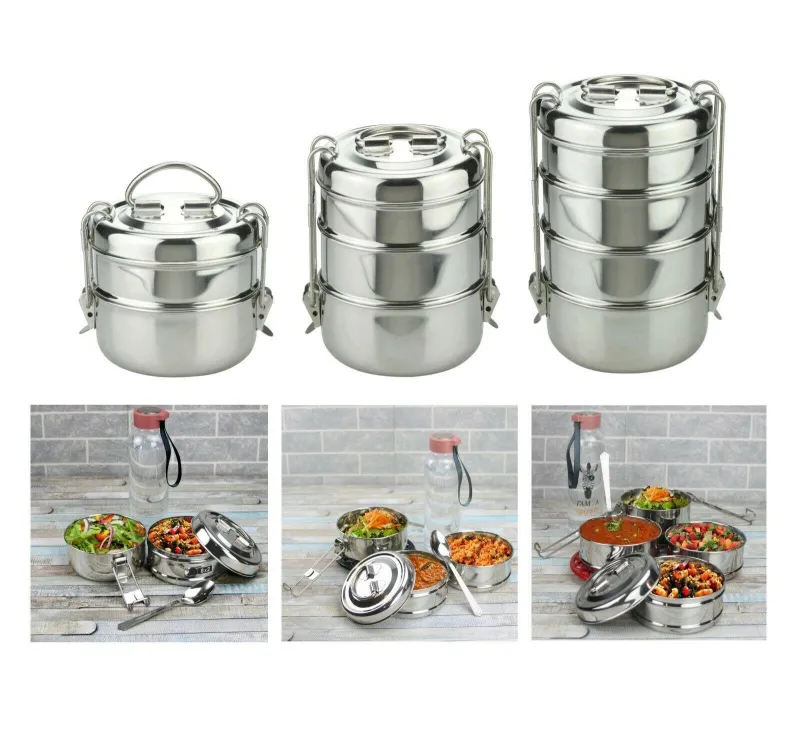
Photo: steel tiffin lunch box stacked compartments Indian food, via cdn.ecommercedns.uk
Every Indian parent knows the tiffin box. Not the American bento-inspired lunch container, but the round steel carrier with two or three stacked tiers — dal in one, sabzi in another, rice below, maybe a small treat on top. The genius of the tiffin is not the food itself. It is the portioning. No single dish dominates. Nothing spills into another compartment. And by the end of lunch, a child has eaten something complete.
Now compare that to how most students approach a CBSE study day. They open the textbook, find the largest chapter, and gorge on it for two hours. By the time they look up, there is no room left for practice problems, no appetite for revision, and certainly no energy for rest. It is the academic equivalent of eating only rice — filling, technically, but not nourishing.
The Case Against the Study Feast
Students preparing for CBSE exams while attending American schools face a genuine squeeze. Public school ends around 3 PM, homework takes its share, and the CBSE syllabus — often studied ahead of or alongside an entirely different curriculum — has to fit into what remains. When that window is short, the instinct is to binge: one subject, one long sitting, one exhausted child.
The problem is that CBSE exams reward breadth as much as depth. The marking scheme distributes marks across the whole syllabus, not just the chapters a student happens to love. A student who masters trigonometry but neglects the chapter on statistics will feel it in the final score, question by question.
Portioning solves this. Small, daily servings of every subject keep each one warm. Nothing goes cold. Nothing gets crammed the night before.
Building the Four Compartments
Think of each study day as a tiffin with four compartments, each with a fixed purpose:
Compartment one: Revision (15–20 minutes). Yesterday's material, reviewed briefly. Flashcards work well here, as does a single page of self-made notes. This is the dal of the day — it goes with everything.
Compartment two: New practice (30–40 minutes). Fresh problems or a new section of a chapter, worked through with pen on paper. For math and science especially, CBSE examiners want to see the working, not just the answer. Practice is where that habit gets built.
Compartment three: Doubt-clearing (10–15 minutes). Questions flagged during practice, written down and resolved — through a textbook re-read, a parent, or a structured doubt system. Skipping this compartment is how small confusions quietly become exam-day disasters.
Compartment four: Rest or reward (whatever remains). Free time, family time, a show, a snack. A tiffin box with a small sweet at the top is a better lunch than one without it, and a study day with genuine downtime is a schedule a child will actually follow.
A Sample Week, Packed and Ready
Here is a tiffin-style timetable a family can print and stick on the refrigerator. It assumes a weekday window of roughly 75–90 minutes after American school hours.
| Day | Revision (15 min) | Practice (35 min) | Doubts (10 min) | Rest |
|---|---|---|---|---|
| Monday | Last week's science | Math chapter problems | Flag and resolve | Family dinner |
| Tuesday | Math formulas | Science — diagrams and definitions | Flag and resolve | Outdoor play |
| Wednesday | English grammar | Social science — map work | Flag and resolve | Screen time, capped |
| Thursday | Science key points | Math — mixed problem set | Flag and resolve | Hindi story time |
| Friday | The week, in one page | Timed mini-test, any subject | Clear everything left | Weekend begins |
Saturday can hold a longer single sitting — a full mock paper or a deeper chapter — because the weekend provides the room for a bigger meal. Sunday stays light, or empty. Even the best tiffin plan needs a day off.
Why Small Portions Beat Big Ones
Educational researchers have known for decades what Indian grandmothers knew first: spaced, repeated exposure beats a single long sitting. The brain consolidates better when it revisits material across days, and short sessions keep frustration low. A student who meets algebra for thirty-five minutes daily will outperform one who meets it for three hours on Sunday and avoids it all week.
There is a quieter benefit, too, one that matters to parents watching from a distance. A predictable, portioned schedule removes the nightly negotiation. The child is not asked, How much are you going to study? but shown, on the fridge, exactly what today's tiffin contains. Structure without rigidity. Expectation without argument.
Portion Sizes Can Flex — the Compartments Cannot
No schedule survives a real American school year untouched. There will be soccer games, orchestra concerts, sick days, and the sheer exhaustion of a seventh period followed by a bus ride. The tiffin approach absorbs this gracefully: on a packed day, shrink every portion rather than deleting a compartment. Ten minutes of revision still counts. Three practice problems still count. The point is that every tier gets touched, even lightly.
What should never shrink to zero is the rest compartment. A student who sacrifices downtime for study is not packing a fuller tiffin — they are packing a box the child will refuse to open tomorrow.
Start Monday, Not Someday
The beauty of this system is that it costs nothing and begins immediately. Print the table, tape it to the refrigerator next to the family calendar, and let your child help fill in the subjects. Ownership turns a parent-imposed schedule into a student-run kitchen.
The CBSE syllabus is a large meal, and no child can eat it in one sitting. But served in the right portions, day after day, it gets finished — calmly, completely, and with room left over for the sweet at the top.