Saturday Sessions, Sunday Solutions: Building a CBSE Study Circle for Families Living Across Time Zones
For most Indian families living in the United States, the CBSE syllabus is a parallel commitment. Children attend American schools from Monday through Friday, carry homework from local teachers, and squeeze in Indian curriculum revision wherever it fits. The result is predictable: weekday CBSE study gets sacrificed, and parents feel the syllabus slipping further away with each passing term.
The solution many successful NRI households have landed on is refreshingly simple—stop trying to compete with the weekday, and claim the weekend instead. A structured Saturday study circle, even one lasting just two hours, can anchor a child's entire CBSE week.
Why the Weekend Model Works
American school days are long and often begin before 8 a.m. Adding a CBSE session on a Tuesday evening rarely survives contact with soccer practice, music lessons, and math homework from the local school. Weekends, by contrast, offer something the weekday cannot: predictability. A 10 a.m. Saturday slot can be protected, repeated, and ritualized.
There is a social dimension too. Children studying alone via worksheets and videos often lose motivation by November. A study circle converts revision from a solitary chore into a shared commitment—closer in feel to a weekend basketball league than to homework.
Finding CBSE Families in Your City
The first step is identifying other families following the Indian curriculum. Start close to home:
- Community temples and cultural centers. Most major metro areas—Dallas, Edison, San Jose, Atlanta—have Indian associations where parents naturally compare notes on education.
- Apartment complexes and neighborhood groups. A message in a local Indian families' WhatsApp or Facebook group often surfaces half a dozen interested households within days.
- Weekend language schools. Hindi, Tamil, and Telugu schools operating on Sundays are full of CBSE families; ask the coordinator to circulate a sign-up sheet.
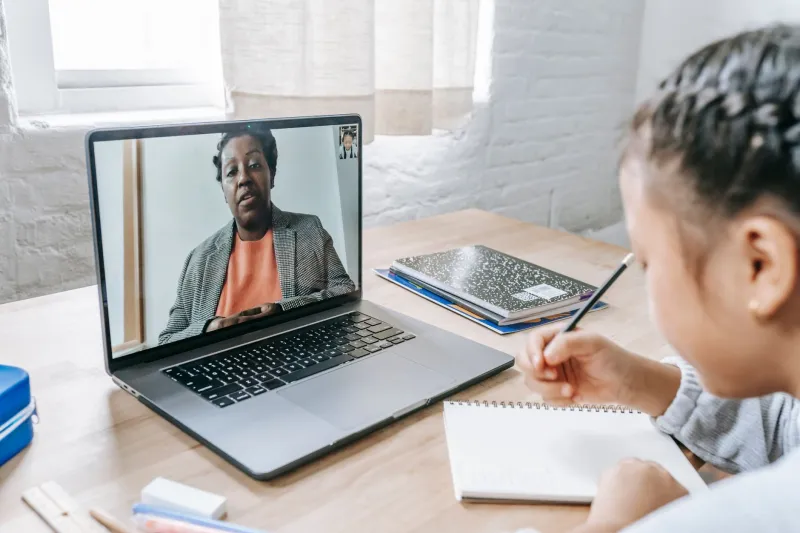
- Virtual circles. If your city has too few CBSE families, a video-call circle with cousins in New Jersey or former classmates from Bengaluru works nearly as well. Time zones within the US are manageable; even an India-based group can align with a Saturday morning ET session.
Aim for four to six children of similar grade level. Fewer than four and the group loses energy; more than six and individual attention evaporates.
Structuring the Two-Hour Session
An unstructured gathering becomes a playdate within fifteen minutes. The circles that endure run on a fixed rhythm:
Minutes 1–15: Recap and quiz warm-up. One child leads a rapid-fire review of the previous week's topics. Rotating this leadership role keeps everyone accountable.
Minutes 15–60: Concept focus. The group works through one chapter or unit using a shared study resource. This is where SriGuru CBSE notes serve as the backbone—every family reads from the same well-organized material, so no child is left behind because their parents bought different textbooks.
Minutes 60–85: Practice problems together. Solve questions collaboratively on a whiteboard or shared document. Discuss why each answer earns marks, not just what the answer is.
Minutes 85–110: Individual or paired revision. Older children can help younger ones; parents circulate to answer questions.
Final 10 minutes: Assignment for the week. Each child receives a short task—summarize a section, prepare five quiz questions—to bring back next Saturday.
Keeping the Group Consistent
Consistency is the hardest part. Three practices help:
- A rotating host. Families take turns hosting (in person) or moderating (online), spreading the load.
- A shared calendar invite. Treat the session like a doctor's appointment—recurring, non-negotiable, visible to the whole family.
- A common syllabus tracker. Maintain a simple spreadsheet mapping chapters to weekends, aligned to the CBSE academic calendar so the group finishes revision before exam season.
The Quiet Payoff
Families who sustain a weekend circle through a full academic year report something unexpected: their children stop treating CBSE as a burden. The syllabus becomes a Saturday routine with friends—a hundred and twenty minutes a week that quietly accumulate into exam readiness.
For parents worried about weekday burnout, the math is reassuring. Two focused weekend hours, reinforced by twenty minutes of light revision on two or three evenings, outperforms a punishing nightly schedule that collapses by October. The weekend bridge holds because it asks for less and delivers more.
Start with one message to one other family. The circle builds itself from there.