Saturday Before Ten: The Quiet Hours That Can Finish a Whole CBSE Chapter
Photo: DERAGHAZIKHAN 786, CC BY-SA 4.0, via Wikimedia Commons
Ask any CBSE student in the United States what their weekday evenings look like, and you will hear the same story: school until three, soccer or piano until six, dinner, American homework, and then—maybe, if everyone still has energy—one exhausted hour of Indian syllabus revision. It is no wonder so many NRI families feel the CBSE syllabus slipping away chapter by chapter.
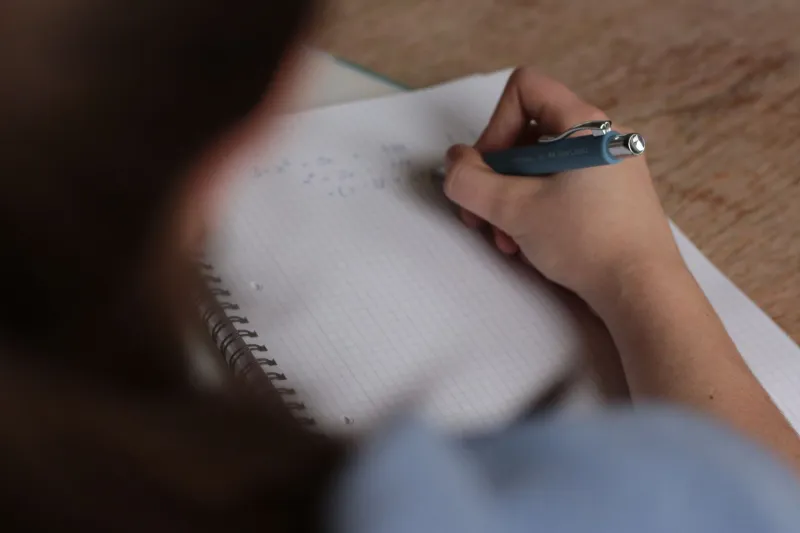
The solution is not more week. It is a better weekend. Specifically, it is the stretch between waking up and about ten o'clock on a Saturday morning, when the house is quiet, no messages are waiting, and a child's focus is at its sharpest. Used well, those three hours can absorb an entire CBSE chapter—reading, notes, and a self-made practice test—before cartoons, cartoons' modern equivalent, or the Saturday carpool ever begins.
Why Morning Beats Evening for the CBSE Syllabus
Research on attention has repeated the same finding for decades: concentration is a finite resource, and it is fullest early in the day. A chapter of Class 8 Science that takes ninety patient minutes at 8 AM can stretch past two frustrating hours at 8 PM, after a full American school day has already drained the tank.
There is a household logic to it, too. Saturday mornings have no competing appointments in most American homes. Nobody's soccer coach has scheduled a 7 AM drill, no school project is due at midnight, and the family group chat is silent. The morning is the only block of the week your child truly owns.
The Hour-by-Hour Saturday Template
Print this out and tape it inside a study folder. Adjust the start time to your family's wake-up rhythm, but keep the proportions.
8:00 – 8:20 AM — Read the chapter straight through. No notes, no highlighting, no phone. The goal is simply to see the whole landscape of the chapter before climbing any single hill.
8:20 – 8:30 AM — Break. Water, a snack, a walk around the yard. Screens stay off; a five-minute video has a way of becoming forty.
8:30 – 9:10 AM — Make the notes. Return to the chapter and condense it. Definitions, formulas, diagrams, and worked examples go into a notebook or onto one page, written by hand. The act of choosing what matters is where real learning happens.
9:10 – 9:20 AM — Break. Same rules as before.
9:20 – 9:45 AM — Build a mini practice test. Using the NCERT in-text and exercise questions, plus any question bank your family trusts, the student selects or writes eight to ten questions covering the whole chapter. Then they close the book and attempt every one.
9:45 – 10:00 AM — Self-check and log. Mark the attempt against the textbook or marking scheme, note which questions missed the mark, and write tomorrow's ten-minute weekday task: review only what was wrong.
By ten o'clock, one chapter is genuinely done—read, condensed, and tested. Every weekday evening that week now carries only a light review load.
For Parents Who Work Weekends
Not every family has a parent free on Saturday morning, and the routine does not require one. What it requires is a start, a timer, and a check-in.
- Set up on Friday night. Keep the textbook, notebook, and a printed question bank on the kitchen table before bed, opened to the right chapter. A prepared desk removes the biggest morning friction point.
- Use the timer as the supervisor. The template above is self-timing. A ten-year-old with a kitchen timer and a clear checklist can run the whole morning without an adult in the room.
- Check in over lunch, not during. Ask to see the notes page and the marked practice test. Five minutes of genuine interest—"Walk me through the one you missed"—does more than an hour of hovering.
- Recruit a remote guru. Grandparents in India are often delighted to receive a photo of the finished notes each Saturday. Accountability, across any time zone, is a powerful motivator.
Rotating Subjects Across Four Saturdays
One strong Saturday is good; a rotation is a system. Rather than doing four weeks of Science in a row, cycle subjects so the whole syllabus moves forward together:
- Week 1 — Mathematics. The longest chapters and the ones most dependent on daily practice benefit most from a full morning.
- Week 2 — Science (alternate Physics/Chemistry and Biology across the term).
- Week 3 — Second language or Social Science, where reading and note-making do the heaviest lifting.
- Week 4 — Review Saturday. No new chapter. Instead, redo the four practice tests from the month and re-read the four notes pages. This consolidation Saturday is what turns four chapters of coverage into four chapters of retention.
At that pace, a student covers roughly thirty chapters across the school year from Saturday mornings alone—before a single weekday evening has been touched.
Keeping It Sustainable
Two guardrails protect the routine from burning out. First, end on time, every time, even when the chapter is not perfect. A routine that reliably ends at ten stays a routine; one that leaks into noon becomes a Saturday punishment. Second, let the reward be real and immediate—breakfast together, the cartoon queue, the weekend's first game of whatever they play. The morning's work should buy the day's freedom, visibly and every single week.
The CBSE syllabus rewards steady accumulation far more than heroic cramming. One quiet Saturday morning at a time, chapter by chapter, your child can arrive at exam season already prepared—and with every weekday evening still their own.