The Fridge-Door Syllabus: Mapping the CBSE School Year for Parents New to the Indian Curriculum
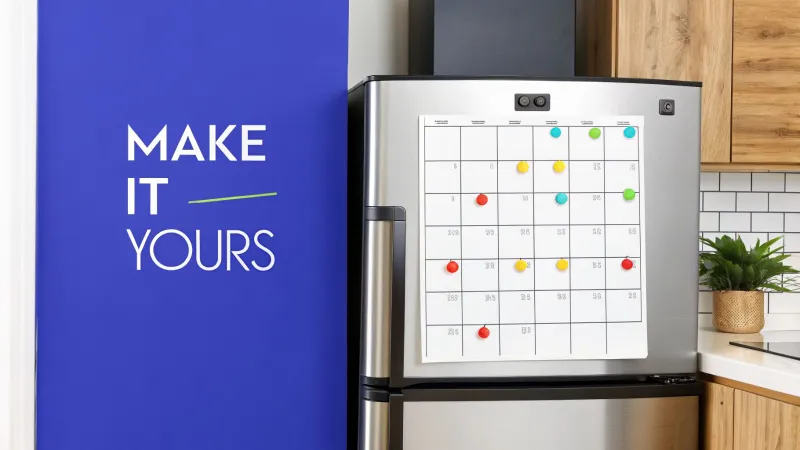
Photo: family calendar whiteboard on refrigerator kitchen, via cdnimg.co
If your household runs on the American school calendar — back-to-school in late August, spring break in March, summer starting in June — the CBSE academic year can feel like a puzzle with missing pieces. Terms don't line up neatly, exam names sound unfamiliar, and the whole thing seems designed for a school system thousands of miles away.
Here's the good news: you don't need to master the Indian curriculum to manage it. You need a calendar, a set of monthly questions, and a clear picture of what each milestone actually means. Print this out, stick it on the fridge, and check it the way you'd check the family schedule.
First, Understand the Shape of the CBSE Year
The CBSE academic year traditionally runs from April to March in India, but most schools serving students in the United States — including weekend Indian schools and online academies — adapt the schedule to fit American routines. Either way, the structure follows the same rhythm:
- Term 1 (roughly fall): New syllabus content begins. Heavy on foundational chapters.
- Half-Yearly (mid-year) Exams: A substantial test covering the first half of the syllabus, usually around November or December.
- Term 2 (winter into early spring): The second half of the syllabus, often moving faster and building on earlier material.
- Pre-Boards: Full-length practice exams held a few months before the final board exams, typically in December or January for Grade 10 and 12 students.
- Board Exams: The culminating national examinations, usually administered in February through May depending on the school's calendar.
For families in the US, the practical translation is this: while your child's American classmates are winding down toward winter break, your CBSE student is entering the most demanding stretch of the year.
Build the Fridge Calendar in Five Rows
Take a large sheet of paper or a whiteboard and divide it into five columns. Label them:
- Month — August through May, aligned with your local school year.
- CBSE Milestone — What's happening in the Indian curriculum timeline.
- Syllabus Check — Roughly how much of the year's material should be covered by now.
- The Question to Ask — One conversation starter for the dinner table.
- Warning Signs — What falling behind actually looks like at this stage.
Fill in the milestones with your child or their tutor during the first week of school. The act of building it together matters as much as the finished product — it signals that this exam cycle is a family project, not a solo burden.
What Each Month Should Look Like
August–September: The Foundation Months. Syllabus coverage should be underway, with the first few chapters of each subject completed. Ask: "Which chapter are you enjoying most, and which one are you avoiding?" Avoidance is your earliest signal. A student who says nothing about a particular subject for three weeks is usually a student who's stuck.
October: The First Reality Check. Many schools schedule unit tests or periodic assessments here. By now, roughly a third of the syllabus should be done. Watch the study hours, not just the grades. Two hours of distracted highlighting is worth less than forty focused minutes with a solved problem set.
November–December: Half-Yearly Season. This is the mid-year exam block, and it's the first true test of retention. Ask: "Can you teach me one thing you learned this term?" If your child can explain a concept in plain English — even if you don't fully follow the math — the understanding is real. If they can only recite formulas, that's a red flag worth raising with a tutor before the term deepens.
January–February: Pre-Board Pressure. For students in Grades 10 and 12, pre-board exams simulate the real thing. By this point, syllabus completion should be near 100 percent, and revision should be underway. Your role here shifts from organizer to supporter: protect sleep, guard the schedule, and resist the urge to add new demands during this window.
March–May: Board Exam Season. Depending on the school, final exams may fall anywhere in this range. The fridge calendar's last column should simply read: logistics, meals, and encouragement. Content revision should be finished; what remains is execution.
Spotting Trouble Without Knowing the Subject
The most common worry among parents new to the CBSE system is simple: How do I know if my child is falling behind if I've never seen this material? You don't need subject knowledge. You need behavioral signals.
- The shrinking notebook. Ask to see their work once a week. Gaps in dates, missing chapters, or blank pages near a specific topic tell you more than a report card ever will.
- The vague answer. "We're doing science stuff" is not an answer. Students on track can usually name the current chapter in every subject within ten seconds.
- The delayed syllabus. CBSE syllabi are publicly available chapter by chapter. You don't need to understand them — just count them. If the school has finished six chapters and your child can name three, you've found the gap early, when it's cheap to fix.
- The mood shift. A child who was chatty about school in September and goes quiet in November isn't necessarily struggling — but it's worth a gentle question before the half-yearly results make it obvious.
Sync It With the American Calendar
The final trick is layering. Mark your local school's breaks, sports seasons, and family commitments on the same calendar. CBSE revision doesn't have to compete with American school life — it has to coexist with it. A student who knows that Thanksgiving week will be light on homework can front-load a chapter in early November. A family trip planned for spring break becomes a natural revision checkpoint rather than a disruption.
The fridge door has always been the command center of the American household. With a little adaptation, it can run a two-continent academic schedule just as smoothly as it runs soccer practice and dentist appointments.
At SriGuru CBSE, we've built our study guides and term planners around exactly this kind of parent visibility — because students succeed faster when the whole household understands the map, even if only the student reads the textbook.