From Lab Notebook to Science Fair Trophy: Repurposing CBSE Practicals for American STEM Showcases
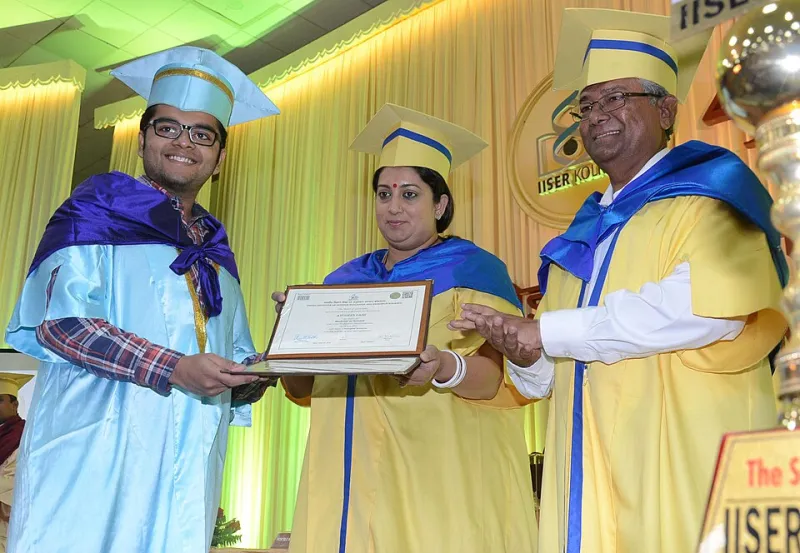
Photo: Ministry of Education, GODL-India, via Wikimedia Commons
Every CBSE physics student spends hours in the lab measuring resistance with a metre bridge, tracing rays through lenses, and plotting graphs of current against voltage. In most American schools, that same experimental rigor is exactly what science fair judges are hunting for. The problem is that many NRI students leave their practical notebooks behind when they walk into a US classroom, never realizing they are sitting on a goldmine of project material.
This guide shows parents and students how to bridge the two worlds — turning CBSE practical work into standout entries for school science fairs, STEM showcases, and regional competitions across the United States.
Why CBSE Practicals Translate So Well
American science fairs reward the same things CBSE examiners do: a clear question, a controlled procedure, honest data, and a sensible conclusion. The CBSE practical syllabus for Classes 9 through 12 is built around hands-on verification of physical laws — Ohm's law, focal lengths of lenses and mirrors, the principle of moments, resistivity of materials, and more.
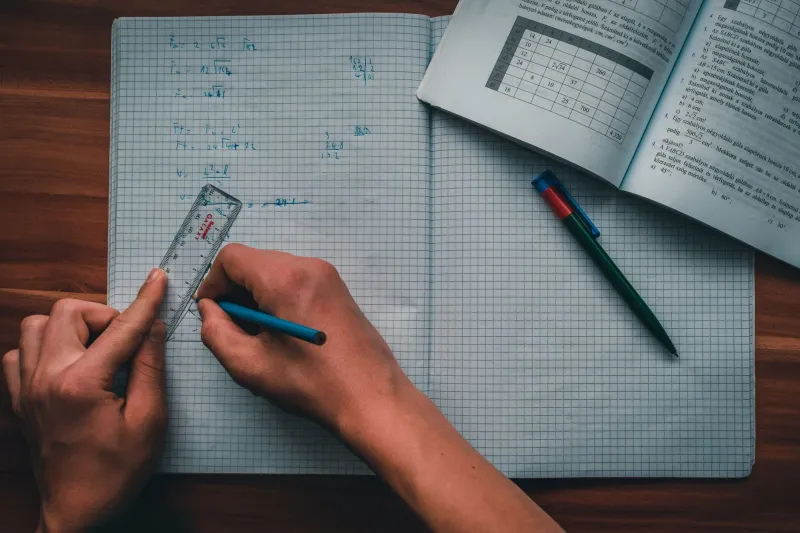
What often surprises US teachers is how systematic CBSE lab work is. Students record observations in tabular form, calculate averages across multiple trials, plot graphs by hand, and explicitly state sources of error. That structure mirrors the scientific method rubric used at most American science fairs, including prestigious ones like Regeneron-affiliated regional fairs and school-level STEM expos.
In short: your child is not starting from zero. They are starting from a completed experiment that simply needs to be reframed.
Five CBSE Practicals That Make Strong Science Fair Projects
Here are concrete examples, with the CBSE origin and the American repackaging side by side.
1. Ohm's Law and Resistance (Class 10 and 12)
CBSE version: verify the relationship between voltage and current using a wire and rheostat.
Science fair version: "How Does Temperature Affect the Resistance of Household Wires?" Extend the original practical by testing wires at different temperatures — chilled in a freezer, at room temperature, and warmed gently — and plot the results. Judges love an experiment that moves beyond verification into genuine investigation.
2. Focal Length of a Concave Mirror (Class 10)
CBSE version: locate the focal length using a distant object and a screen.
Science fair version: "Building a Low-Cost Solar Concentrator: Measuring Mirror Curvature for Solar Cooking." Connect the optics practical to renewable energy — a theme that resonates strongly with American judges, especially in sustainability-focused fairs.
3. The Principle of Moments (Class 11)
CBSE version: balance a metre scale on a knife-edge with slotted weights.
Science fair version: "Lever Arms in Everyday Engineering: How Beam Balance Explains See-Saws, Crowbars, and Crane Design." Add real-world models or photographs of construction equipment to show applied thinking.
4. Resistivity of a Wire (Class 12)
CBSE version: determine resistivity using a screw gauge and metre bridge.
Science fair version: "Which Metal Conducts Best? A Budget Comparison of Copper, Aluminium, and Steel Wiring." The precision measurement skills from the screw gauge practical become a selling point: your child can explain why they measured wire diameter at multiple points and averaged the readings.
5. Refraction Through a Glass Prism (Class 10)
CBSE version: trace the path of light and measure the angle of deviation.
Science fair version: "Rainbows on Demand: How Wavelength Determines Deviation in Prisms and Raindrops." Link the practical to atmospheric optics — a topic that photographs beautifully on a display board.
Explaining CBSE Methodology to American Teachers
US teachers who have never seen a CBSE lab manual may be puzzled by terminology. Prepare your child with a short glossary of translations:
- Metre bridge becomes a "Wheatstone bridge apparatus" or simply "a resistance measurement setup."
- Vernier callipers and screw gauge become "calipers and micrometer screw gauge" — precision instruments American judges will recognize.
- Practical file becomes a "lab notebook" — and it should be brought to the fair, because a handwritten, multi-trial record is impressive evidence of authentic work.
Encourage your child to say, "I performed this experiment as part of my Indian physics curriculum and extended it by..." That single sentence establishes originality while crediting the foundation. Judges value students who can articulate where their idea came from and what they added.
What American Judges Actually Score
Most science fairs use a rubric with roughly these weightings:
- Scientific thought and method (about a third): a testable question, controlled variables, repeated trials. CBSE practicals already instill all three.
- Depth of understanding: the student, not the parents, must answer every question about the procedure. Practicing the oral defense at home — the way one would prepare for a CBSE viva — is a distinct advantage.
- Data presentation: clean tables and graphs. The graph-plotting discipline from CBSE practical files transfers directly.
- Creativity and real-world relevance: this is where the extension matters. A pure verification exercise scores lower than one with a novel twist or application.
One caution: many American fairs, following Intel ISEF-style rules, require prior approval for projects involving electricity or human subjects. A simple circuit powered by household batteries is usually fine, but check the local fair's safety guidelines before finalizing an electrical project.
A Practical Timeline for Busy Families
Between American school hours, activities, and CBSE revision, time is scarce. A workable plan:
- Four to six weeks out: choose the practical to extend and draft the question.
- Three weeks out: run the experiment over two weekends, recording all trials.
- Two weeks out: build the display board and rehearse the explanation.
- Final week: one mock judging session at the dinner table.
The CBSE practical notebook, kept carefully through the year, is the raw material for all of it. Tell your child to treat every lab session not just as board exam preparation, but as the first draft of a project that could earn recognition on a completely different stage.
The Bigger Picture
Families navigating two educational systems often feel they must choose one over the other. The science fair workaround proves otherwise. The rigor of CBSE practicals, presented in the idioms of American STEM competitions, gives NRI students a double advantage: depth their classmates may lack, and a story — two curricula, one curious mind — that judges remember long after the fair ends.